The Original
09/29/2025 11:30am
The transformation of fitness spaces has accelerated dramatically, with at home barre studios emerging as one of the most sought-after wellness investments. Recent surveys indicate that 73% of barre practitioners who established dedicated home spaces maintained consistent practice routines compared to just 34% who attempted workouts without proper setup. This dramatic difference underscores a fundamental truth: the right environment and equipment don't just enhance your at home barre practice, they make it sustainable.
At VITA Barre, we've witnessed countless transformations that begin not with the first plié, but with the first decision to create a dedicated space. Whether you're converting a spare bedroom, claiming a corner of your living room, or designing a full studio, the principles for successful at home barre setup remain the same. Your home barre studio should inspire daily practice, support proper technique, and evolve with your growing expertise.
The science behind successful home fitness spaces reveals fascinating insights about habit formation and exercise adherence. Environmental psychology research demonstrates that dedicated exercise spaces increase workout frequency by an average of 67% while reducing the mental barriers that prevent consistent practice. When your dance barre is always ready, when your space feels intentional and welcoming, the transition from intention to action becomes almost effortless.
The foundation of any exceptional home barre studio begins with honest spatial assessment and clear goal setting. Professional studio designers emphasize that successful home conversions start not with equipment purchases, but with understanding how you move, when you practice, and what motivates your consistency.
Spatial requirements vary significantly depending on your primary barre style and movement preferences. Classical ballet-inspired routines require approximately 6 feet of clearance around your dance barre for grand battements and traveling combinations. At home barre workouts focusing on isometric holds and small movements can function beautifully in spaces as compact as 8x6 feet. Contemporary barre fusion incorporating yoga flows and Pilates transitions benefits from 8x10 feet minimum to accommodate floor work and larger movement patterns.
Ceiling height considerations extend beyond basic clearance. Optimal home studios feature 9-foot ceilings or higher to accommodate overhead port de bras and jumping movements without psychological restriction. However, spaces with 8-foot ceilings can work effectively by positioning your barre equipment strategically away from overhead fixtures and ensuring adequate visual breathing room.
Natural light transforms practice quality in ways that artificial lighting cannot replicate. Research from the International Association of Lighting Designers shows that natural light exposure during exercise increases endorphin production by 23% while reducing perceived exertion levels. When possible, position your dance barre perpendicular to your primary window source to minimize shadows and glare during morning and evening practice sessions.
Storage solutions integrated from the initial design phase prevent the common pitfall of equipment scattered throughout living spaces. Successful home studios incorporate designated areas for props, extra resistance bands, and seasonal equipment rotation. Custom storage often costs less than organizing furniture purchased separately while maintaining the clean, intentional aesthetic that supports focused practice.
The heart of every at home barre studio lies in selecting equipment that balances functionality, durability, and spatial efficiency. Modern barre equipment has evolved far beyond basic fixed installations, offering sophisticated solutions for contemporary home fitness needs.
Professional-grade dance barre selection requires understanding the fundamental differences between stationary, portable, and adjustable systems. Wall-mounted installations using ballet barre brackets provide maximum stability for advanced work including ballet cambre and aggressive stretching routines. These systems accommodate multiple height settings through slide tracks or adjustable mounting systems, making them ideal for households with practitioners of varying heights or skill levels.
For renters or those seeking maximum flexibility, a foldable ballet barre represents the pinnacle of portable design innovation. Modern foldable systems feature aircraft-grade aluminum construction, providing studio-level stability while folding to compact storage dimensions. Premium models incorporate height adjustment mechanisms that rival permanent installations, with some featuring the adjusta bar technology that allows continuous height modification rather than fixed preset positions.
The fitness barre category has exploded with innovative solutions addressing specific home challenges. Free-standing models eliminate wall mounting requirements while providing exceptional stability through weighted base systems or tension-spring mechanisms. These systems particularly excel in apartments, rental properties, or multi-use spaces where permanent installation isn't feasible.
Custom barres represent the ultimate investment for serious practitioners developing dedicated studio spaces. Working with specialized manufacturers allows optimization for your specific ceiling height, wall configuration, and aesthetic preferences. Many custom installations incorporate features like integrated resistance band anchor points, prop storage, and even sound system integration for seamless music streaming during practice.
Essential supporting equipment extends your at home barre studio's functionality while maintaining the minimalist aesthetic that promotes focused practice. Professional-quality mirrors positioned to provide full-body visualization without creating visual distractions enhance form awareness and spatial orientation. Anti-fatigue flooring designed specifically for barre work protects joints while providing the slight traction needed for stability exercises and relevé work.
Successful home barre studios function as integrated ecosystems where each element supports seamless transitions between different exercise phases. Professional studio design principles translated to home spaces create remarkable efficiency within limited square footage.
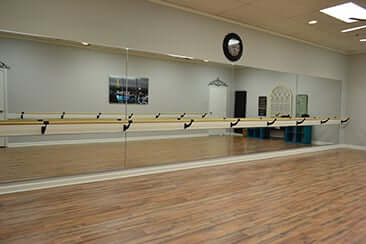
The primary barre zone requires the most spatial and equipment investment, serving as your studio's anchor point. Position your dance barre to maximize natural light exposure while ensuring adequate clearance for leg extensions and port de bras combinations. The standard placement allows 4-5 feet of space both facing and away from the barre, accommodating traditional center work as well as barre-assisted stretching.
Many home practitioners discover that positioning their ballet rail parallel to the room's longest wall creates optimal flow patterns for both barre and center work. This configuration allows easy transition from supported exercises to independent movement while maintaining visual connection to your reflection for form monitoring.
Floor work zones complement your barre area with dedicated space for core work, stretching, and cool-down routines. Professional studios typically allocate equal floor space to barre space, but home installations can optimize this ratio based on your preferred workout styles. Practitioners focusing heavily on ballet technique might reduce floor work space in favor of expanded barre clearance, while fitness barre enthusiasts often prefer larger floor areas for integration with Pilates and yoga movements.
Strategic equipment placement within your floor zone prevents constant reorganization during workouts. Wall-mounted or under-barre storage for resistance bands, light weights, and exercise balls keeps essential props accessible without cluttering your movement space. Many successful home studios incorporate furniture that doubles as storage and seating, maintaining clean lines while maximizing functionality.
The intersection of technology and at home barre practice has created unprecedented opportunities for instruction quality, progress tracking, and motivation maintenance. Smart studio features elevate home practice from basic workout space to comprehensive fitness ecosystem.
Audio system integration transforms practice quality through both music delivery and instructional content. Successful installations prioritize sound clarity and even distribution rather than maximum volume, creating an immersive environment that supports rhythm and flow. Wireless speakers positioned to avoid sound shadows from your dance barre placement ensure consistent audio quality throughout your movement range.
Many contemporary home studios integrate smart speakers with voice control capabilities, allowing hands-free music selection, timer setting, and even lighting adjustment during practice. This seamless integration reduces interruption-based motivation loss while maintaining focus on movement quality and internal awareness.
Progress tracking technology has evolved beyond basic fitness trackers to include sophisticated movement analysis systems. Computer vision applications now provide real-time form feedback, comparing your positions to professional demonstrations while highlighting areas for improvement. Some systems integrate with your existing smart TV or tablet setup, providing mirror-like feedback enhanced with digital overlays showing proper alignment cues.
Climate control integration ensures consistent comfort across varying seasons and practice intensities. Smart thermostats programmed to your typical practice schedule pre-condition your studio space, while smart fans provide circulation enhancement during high-intensity intervals without disrupting music or instruction audio.
At home barre studios designed to accommodate multiple users and age groups require thoughtful planning that balances individual needs with shared space efficiency. The growing popularity of ballet barre for children has created demand for family-friendly studio designs that inspire consistent practice across generations.
Height-adjustable systems become essential in multi-user environments, with modern solutions offering quick, tool-free adjustment between adult and child proportions. The most sophisticated systems feature memory settings that allow instant repositioning to preset heights, eliminating setup time between different practitioners. Some custom barres incorporate dual-height configurations with both adult and child positions fixed permanently, though these require larger spatial footprints.
Children's barre practice introduces unique safety considerations that adult-focused studios might overlook. Rounded corners on all equipment, non-slip flooring with extra cushioning, and impact-resistant mirror installation protect young practitioners while building confidence in movement exploration. Many family studios incorporate colorful floor markings that help children understand spacing and positioning concepts while maintaining the sophisticated aesthetic that motivates adult practice.
Motivation and engagement strategies differ dramatically between adult and child practitioners, requiring flexible environmental design. Successful family studios incorporate elements that can be modified based on the primary user, such as removable wall graphics, adjustable lighting intensity, and modular storage that accommodates both adult fitness equipment and children's props like ribbons and scarves.
Storage solutions in family studios require additional capacity for equipment sizing variations and different activity types. Child-height storage encourages independent setup and cleanup while maintaining organization systems that prevent equipment damage or loss.
The long-term success of your at home barre studio depends heavily on maintenance planning and equipment longevity considerations that many initial setups overlook. Professional-grade equipment requires specific care protocols that preserve functionality while maintaining safety standards.
Dance barre maintenance varies significantly based on material selection and mounting systems. Wooden barres require regular conditioning to prevent splitting and maintain proper grip texture, while aluminum and steel options need periodic hardware inspections to ensure mounting security. Ballet barre brackets and slide tracks accumulate dust and debris that can interfere with height adjustment mechanisms, requiring quarterly deep cleaning for optimal function.
The adjusta bar systems popular in modern home studios incorporate moving parts that benefit from preventive maintenance schedules. Lubrication of adjustment mechanisms every six months prevents binding and ensures smooth operation, while bolt and hardware inspections identify potential safety issues before they become problems.
Flooring maintenance directly impacts both equipment longevity and practice safety. Specialized barre flooring requires different cleaning protocols than standard home flooring, with pH-neutral cleaners that won't degrade surface traction or create slippery conditions. Regular deep cleaning removes the buildup of skin oils and product residues that can make surfaces hazardous during balance work or relevé exercises.
Environmental factors like humidity control and temperature stability protect equipment investments while maintaining optimal practice conditions. Wood components expand and contract with seasonal changes, potentially affecting mounting hardware tightness and mirror positioning. Smart home systems can automate environmental control, maintaining consistent conditions that extend equipment life while optimizing practice comfort.
Creating an at home barre studio represents a significant initial investment that requires careful analysis of cost versus benefit over typical usage lifespans. Industry data reveals that well-planned home studios typically pay for themselves within 18 to 24 months compared to ongoing studio membership costs, while providing unlimited practice access and customization options.
Equipment cost analysis shows dramatic variation based on quality and feature selection. Basic foldable ballet barre systems start around $150 for consumer-grade models, while professional-quality portable systems range from $400 to $800. Custom barre installations featuring ballet barre brackets, slide tracks, and professional mounting systems typically cost $600 to $1200 including professional installation.
The fitness barre and dance barre market offers solutions at virtually every price point, but cost-per-use calculations favor higher-quality initial investments. Professional-grade equipment lasting 10+ years with minimal maintenance often provides better value than frequent replacement of lower-cost alternatives, particularly when accounting for the disruption and re-setup time required for equipment failure.
Supporting equipment costs including mirrors, flooring, storage, and technology integration can easily match primary equipment investment. However, phased installation approaches allow spreading costs over time while immediately enabling basic practice routines. Many successful home studios begin with essential equipment only, adding refinements and technology integration as usage patterns establish and budget allows.
Studio membership elimination creates immediate monthly savings that fund equipment purchases. Average boutique barre studio memberships cost $120 to $180 monthly, meaning a $2000 home studio investment breaks even in 12 to 16 months. Additional savings include transportation costs, scheduling flexibility value, and the ability to practice without time constraints or booking limitations.
The journey from envisioning your perfect at home barre studio to experiencing its daily benefits represents more than equipment installation. It's an investment in consistent wellness practice and personal growth. Every element of your studio, from the stability of your dance barre to the quality of your flooring, contributes to practice experiences that accumulate into long-term physical and mental transformation.
At VITA Barre, we've seen at home barre studios become catalysts for lifestyle changes that extend far beyond workout routines. When your space is ready, when your barre equipment at home supports your goals, and when your environment inspires rather than inhibits practice, the compound effects of consistent movement create remarkable results.
Whether you choose a foldable ballet barre for apartment living, invest in custom barres with slide tracks for a dedicated studio room, or start with basic fitness barre equipment that grows with your practice, the key lies in matching your at home barre setup to your actual usage patterns and long-term goals. Your perfect studio exists at the intersection of your space, your budget, and your commitment to consistent practice.
The future of home fitness continues evolving toward more personalized, technology-enhanced experiences, but the fundamental truth remains unchanged: consistent practice in a space designed for success creates transformations that generic gym visits cannot match. Your home barre studio isn't just exercise equipment. It's the foundation for the healthiest, strongest, most confident version of yourself