The Original
09/25/2025 11:30am
Dance barre workouts have emerged as one of the most scientifically-backed fitness modalities, offering measurable improvements in strength, flexibility, mental health, and functional movement. Recent research demonstrates that just 10 barre classes over two months can significantly improve pelvic floor function, reduce stress-related symptoms, and enhance overall fitness more effectively than traditional dance fitness. This unique exercise method combines isometric strength training, ballet-inspired movement, and mind-body integration to create transformative results for practitioners of all levels.
The growing body of research reveals that barre's distinctive approach, using high-repetition, low-resistance movements at a dance barre, creates physiological adaptations that extend far beyond typical fitness outcomes. From reducing cortisol levels by the same magnitude as antihypertensive medications to rewiring neural pathways for better balance and coordination, barre represents a convergence of ancient movement wisdom and modern exercise science.
The most striking aspect of barre workouts lies in their ability to build functional strength through isometric contractions and progressive fatigue protocols. Research from exercise physiology journals reveals that six minutes of isometric exercise equals 30-35 minutes of traditional weight training in terms of muscle activation, explaining why barre practitioners experience that characteristic "shake" that signals optimal muscle recruitment.
The magic happens through a concept called time under tension. Unlike traditional strength training that moves through full ranges of motion with heavy weights, barre keeps muscles contracted for extended periods through small, controlled movements at the dance barre. This approach activates both fast-twitch and slow-twitch muscle fibers while recruiting stabilizer muscles often neglected in conventional workouts. A 2023 comparative study of 35 women found that barre fitness produced statistically significant improvements in physical fitness, waist and hip measurements, and cardiovascular function; results that dance fitness alone couldn't match.
Flexibility gains occur simultaneously with strength building through barre's unique integration of dynamic-active and static-passive stretching. Research demonstrates that muscles relax more effectively into stretches when repeatedly activated during dynamic movements, making barre's alternating pattern of strengthening and stretching more effective than single-method approaches. This dual-action explains why practitioners often see dramatic improvements in both strength and flexibility within the same timeframe.
Core strengthening extends beyond superficial abdominals to include the deep stabilization system; transverse abdominis, pelvic floor muscles, diaphragm, and hip stabilizers. The 2023 Pure Barre study on urinary incontinence provides compelling evidence: all 25 women showed significant improvement in pelvic floor function after just 10 classes, with 54% reduction in urgency symptoms and 53% reduction in stress incontinence. This research validates what physical therapists have long recognized: barre's systematic approach to core stability addresses dysfunction at its source.
The psychological benefits of barre workouts stem from their unique demand for complete mental presence. Unlike activities where the mind can wander, barre requires practitioners to simultaneously remember choreography, maintain precise positioning at the dance barre, coordinate with music, focus on form, and control breathing. This forced mindfulness creates what neuroscientists call "muscular meditation," rewiring neural pathways toward healthier thinking patterns.
Clare Groves, a senior mental health clinician and ballet practitioner, explains that "ballet is mindfulness at its best. The actual act of dragging our thoughts back into the moment rewires neural pathways into healthier thinking patterns." Brain imaging studies of dancers reveal increased gray matter density in areas controlling balance and decision-making, along with a remarkable 76% reduced risk for dementia, the highest protection rate among 11 different physical activities studied.
Stress reduction occurs through multiple biological pathways. Research published in systematic reviews demonstrates that low-to-moderate intensity exercise like barre effectively reduces baseline cortisol levels, with participants showing mean reductions of 7.4/3.3 mmHg in blood pressure, equivalent to antihypertensive medication effects. The controlled breathing emphasized throughout barre classes activates the parasympathetic nervous system, promoting recovery and relaxation.
Group fitness research reveals additional psychological advantages. Studies show that group exercise reduces perceived stress by 26% compared to solo workouts, while improving mental, physical, and emotional quality of life measures by 12.6%, 24.8%, and 26% respectively. The social support network created in barre classes provides five distinct types of support: emotional encouragement, experience validation, knowledge sharing, practical accountability, and genuine companionship.
Barre's distinctive position in the fitness landscape comes from its synthesis of multiple exercise disciplines with ballet's aesthetic precision. While yoga emphasizes flexibility and mindfulness, barre adds high-intensity muscle work through small pulsing movements that create intense fatigue. Compared to Pilates, barre incorporates choreographed movements set to music with greater emphasis on cardiovascular conditioning through sustained muscle engagement.
Traditional strength training builds maximum force through heavy resistance and lower repetitions, while barre develops muscular endurance and functional strength through high repetitions with lighter resistance. Research on the repetition continuum shows that muscle adaptations can be optimized across wide loading zones, validating barre's approach of training to fatigue with lighter loads.
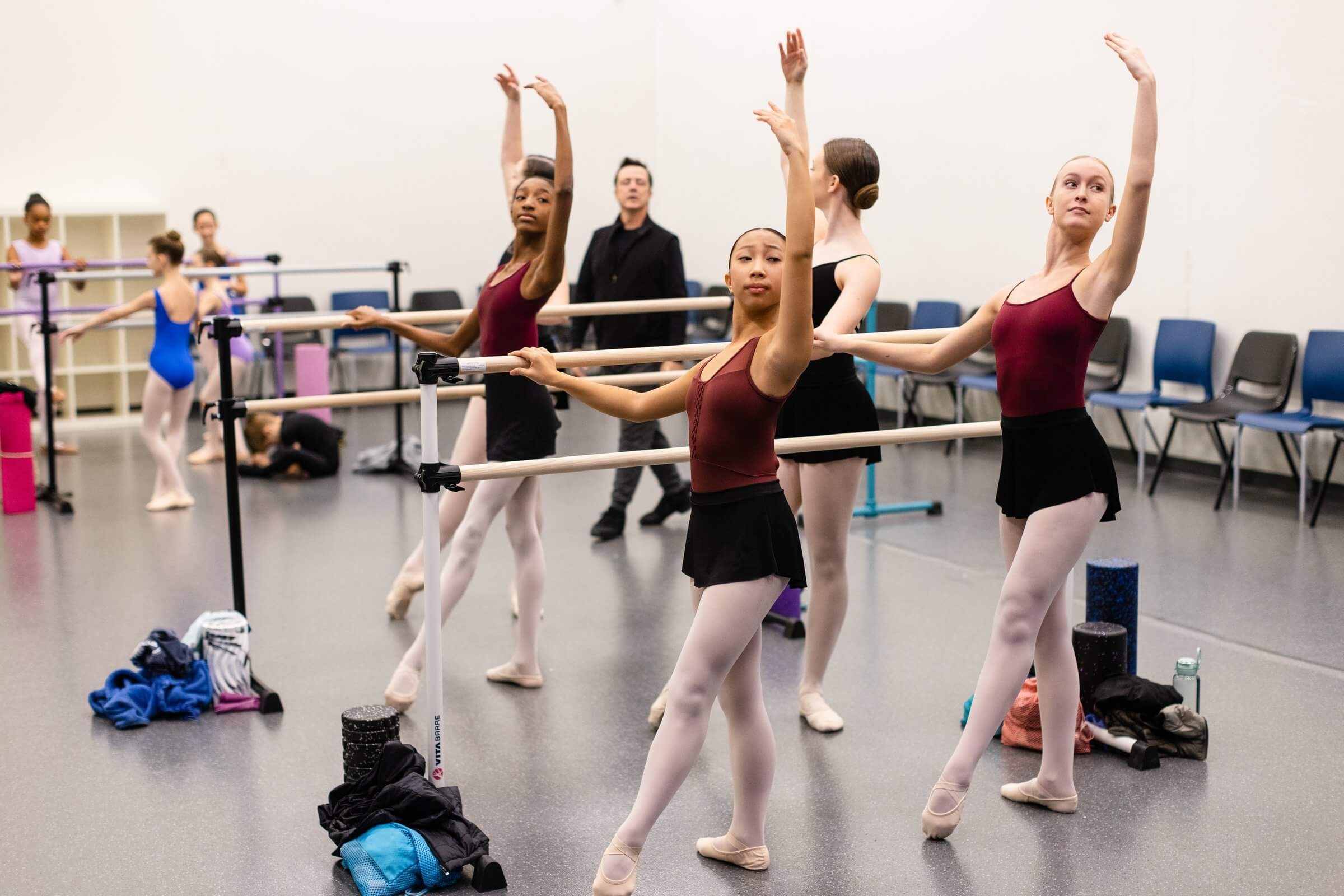
The ballet barre itself serves as a unique training tool, providing adjustable support that allows practitioners to gradually progress from assisted to unassisted movements. Whether using a traditional ballet rail mounted to the wall or a portable dance barre, this progressive overload through reduced assistance rather than increased weight offers a joint-friendly approach to strength development that's particularly valuable for injury prevention and rehabilitation. Advanced movements like ballet cambre (backbends at the barre) demonstrate how the ballet rail provides both support and resistance for complex spinal movements.
Unlike high-impact cardio that elevates heart rate through jumping and running, barre achieves cardiovascular benefits through sustained muscle work at the dance barre without joint stress. This creates an ideal training environment for individuals with joint issues, those recovering from injuries, or anyone seeking effective exercise without the wear and tear of high-impact activities.
Office workers and desk-bound professionals find particular relief through barre's targeted approach to postural dysfunction. The constant core engagement supported by a dance barre helps maintain proper sitting posture while specific exercises target tight hip flexors, rounded shoulders, and weakened upper back muscles that result from prolonged sitting. Research demonstrates that 8-week posture correction programs produce measurable improvements in spinal alignment, reducing the musculoskeletal pain that affects 50% of Americans annually.
Athletes discover cross-training benefits that enhance performance while reducing injury risk. The focus on smaller stabilizer muscles often neglected in sport-specific training helps address muscle imbalances that contribute to overuse injuries. Professional ballet dancer conditioning studies show significant improvements in functional movement tests, with benefits sustained at four-month follow-up periods.
Seniors benefit from barre's emphasis on balance, bone density, and fall prevention. The weight-bearing, low-impact nature stimulates osteoblast activity for bone health while single-leg exercises at the dance barre significantly improve stability. Research shows that balance training reduces fall risk and improves functional mobility, making barre an ideal exercise choice for aging populations.
Beginners appreciate the accessibility and modification options available in every barre exercise. The non-intimidating environment combined with immediate muscle engagement provides motivation and confidence building. The progressive difficulty structure allows gradual advancement as strength and coordination improve. For families, a ballet barre for children can introduce young people to proper movement patterns and posture awareness from an early age, creating lifelong healthy habits.
Immediate benefits emerge within the first two weeks, including improved posture awareness, enhanced mind-body connection, increased energy levels, and reduced muscle tension. Practitioners often report better sleep quality and mood improvements from the first class.
Weeks 3-4 bring noticeable physical changes: improved balance and stability, beginning strength gains in core and stabilizer muscles, enhanced flexibility and range of motion, and greater endurance during classes. The characteristic muscle "fullness" may appear as muscles gain tone and increase water retention for recovery.
Months 2-6 represent the progressive development phase. Visible posture improvements become habitual, core strength gains translate to daily activities, and practitioners develop a natural relationship with the dance barre that enhances muscular endurance dramatically. Muscle definition begins to show as practitioners may experience temporary bulking as muscles gain tone before fat loss becomes apparent.
Six months and beyond marks long-term transformation: lean, elongated muscle development without bulk, significant body composition changes, dramatic posture improvements that become second nature, peak muscular endurance and functional strength, and maximum flexibility gains. The mental benefits compound as well: established mind-body connection, improved stress management skills, and enhanced overall well-being.
Recent developments point toward continued evolution and validation of barre's benefits. The integration of wearable technology, mobile apps, and data-driven training personalizes the experience while maintaining barre's fundamental movement principles at the dance barre. Equipment innovations like portable barres with height adjustability and stability features make high-quality home practice more accessible than ever.
The growing scientific validation, from pelvic floor function studies to cardiovascular research, supports barre's expansion into therapeutic and rehabilitation applications. Physical therapists increasingly incorporate barre-style exercises in treatment protocols, recognizing the alignment between barre methodology and rehabilitative principles.
Barre workouts represent a convergence of artistry and science, combining ballet's grace with evidence-based exercise principles to create comprehensive fitness benefits. The research consistently demonstrates improvements across multiple domains, from measurable strength gains and flexibility improvements to stress reduction and enhanced cognitive function. Whether practiced at home with a portable dance barre or in studios with professional installations, barre offers a uniquely effective, accessible, and sustainable approach to fitness that adapts to practitioners' changing needs throughout their lives.
The mounting scientific evidence, combined with innovations in equipment and digital accessibility, positions barre as more than a fitness trend, it's an investment in long-term physical and mental well-being that delivers measurable results for practitioners willing to embrace its unique blend of precision, challenge, and grace at the dance barre.