The Original
10/13/2025 11:30am
The living room furniture is pushed to the side again. Your daughter is practicing her pliés against the back of the couch. Your son is attempting pirouettes in socks on the hardwood floor. If this sounds familiar, you're not alone. Thousands of parents are discovering that their child's passion for dance deserves more than makeshift practice spaces and that investing in a proper ballet barre for children transforms home practice completely.
Creating a dedicated dance area at home doesn't require a mansion or a professional studio budget. With thoughtful planning, the right ballet barre for children, and a smart approach, you can transform a corner of a bedroom, a section of the basement, or even a garage into an inspiring space where your young dancer can safely practice between classes.
At VITA Barre, we've helped countless families create beautiful home practice spaces that grow with their children. Whether your child is just starting ballet classes or is a serious student dreaming of a dance career, this guide will show you how to design a functional, safe, and inspiring home dance environment with the perfect ballet barre for children.
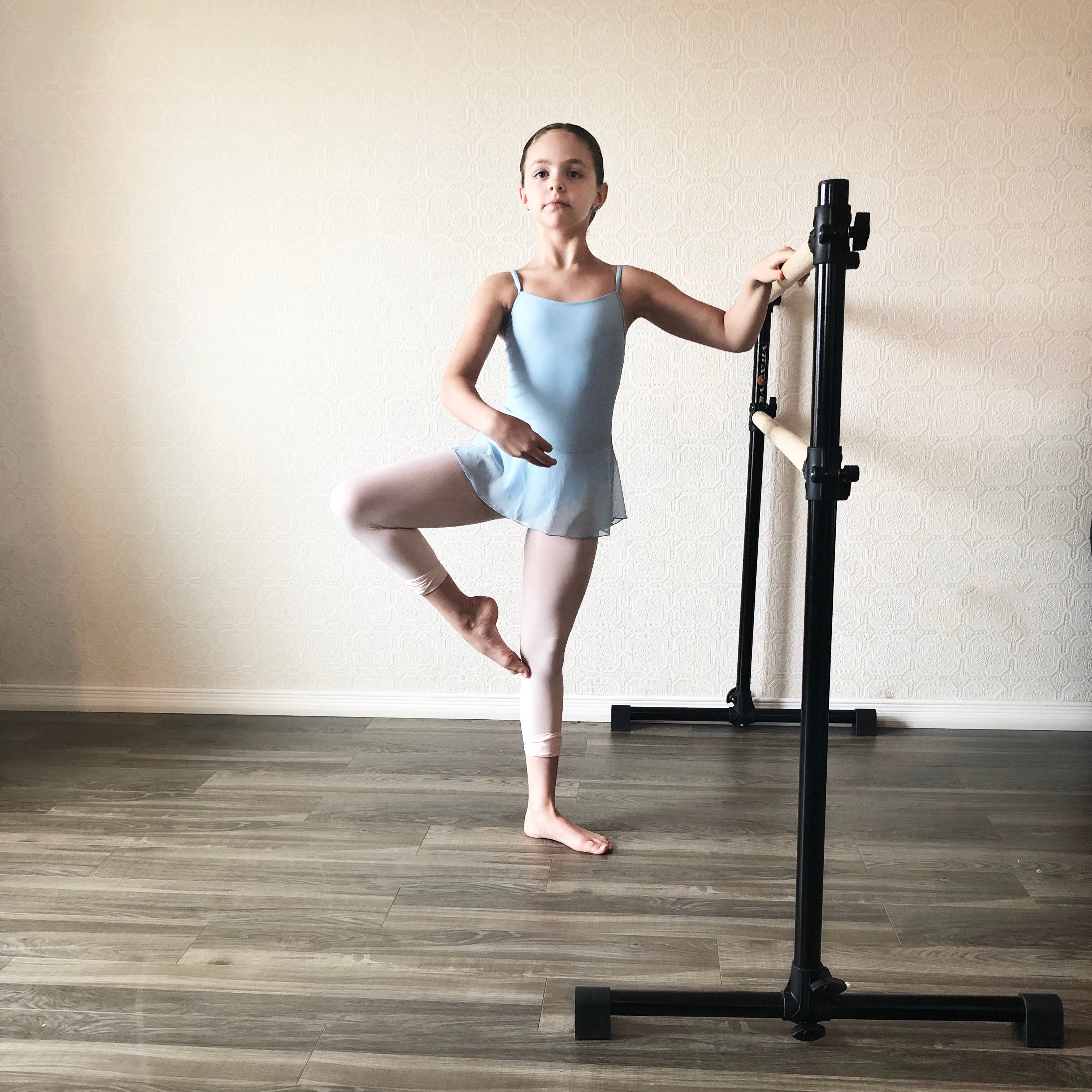
Before we dive into the specifics, let's talk about why having a dedicated practice space with a proper ballet barre for children makes such a difference. Dance instructors consistently emphasize that what happens between classes matters just as much as class time itself. Muscle memory develops through repetition, and young dancers who practice regularly at home progress significantly faster than those who don't.
Beyond skill development, having a special place to dance gives children ownership of their art form. It sends a powerful message: your passion matters, your practice matters, and we support your dreams. Many professional dancers credit their parents' support in creating home practice spaces as pivotal moments in their dance journey.
A home dance space also offers practical benefits. Your child can stretch and warm up before leaving for class, preventing rushed arrivals and injury risk. They can work on choreography without waiting for studio time. And perhaps most importantly, with their own ballet barre for children at home, they can dance for joy whenever inspiration strikes, maintaining that love of movement that made them fall in love with dance in the first place.
You don't need a ballroom to create an effective practice area with a ballet barre for children. Most dance exercises require surprisingly little space. A productive home studio can fit in an area as small as 8 feet by 8 feet, though 10 feet by 10 feet provides more comfortable room for traveling steps and turns.
When selecting your location, consider ceiling height first. Your child needs to safely execute jumps and lifts without hitting overhead fixtures. A minimum ceiling height of 8 feet works for most children and many teens, though 9 feet or higher is ideal if available.
Natural light creates an inspiring atmosphere and helps with visibility during practice. If possible, choose a space with windows. However, avoid rooms with direct afternoon sun that might create glare or uncomfortably heat the space. Temperature control matters too, as dancers need a moderately warm environment to prevent injury but not so hot that they become uncomfortable.
Privacy considerations matter more as children grow older. Younger dancers often love practicing in common areas where family members can watch and encourage them. Tweens and teens, however, may prefer more private spaces where they can experiment, make mistakes, and push themselves without an audience.
Here's where many well-meaning parents make a costly mistake: they overlook the importance of appropriate flooring. Hard surfaces like concrete, tile, or standard hardwood seem fine at first, but they pose significant injury risks for young dancers who spend hours practicing jumps and repetitive movements.
Professional dance floors are designed to absorb shock and provide slight spring, reducing impact on growing joints. While installing professional sprung floors may exceed most home budgets, several affordable alternatives exist that work beautifully alongside a ballet barre for children.
Foam-backed marley flooring offers excellent protection and costs considerably less than sprung systems. These vinyl floors roll out over your existing floor, providing the slip-resistance dancers need for turns while offering cushioning for jumps. Many come in neutral colors that look professional and clean.
For tighter budgets, high-quality dance mats or interlocking foam tiles designed for dance use provide decent protection. Avoid general exercise mats, which are often too soft and can interfere with balance and turning. Whatever you choose, ensure the surface allows for both controlled sliding during certain movements and adequate grip for balance work.
Never allow children to dance on concrete, even with shoes. The unforgiving surface creates excessive impact that can lead to stress fractures, shin splints, and long-term joint damage. If your only available space has concrete flooring, investing in proper flooring isn't optional, it's essential.
A proper ballet barre for children transforms a practice space from basic to functional. This is where your young dancer will spend significant time developing the technique, strength, and grace that ballet demands.
Parents often ask whether they should invest in a free standing ballet barre or install a wall-mounted system. When shopping for a ballet barre for children, each option offers distinct advantages.
A free standing ballet barre provides maximum flexibility. You can move it to different rooms as needs change, take it outside for fresh-air practice, or store it away when the space serves other purposes. For families who rent their homes or anticipate moving, the portability of a free standing ballet barre for children can't be beat. Modern free standing barres are remarkably stable when properly designed, offering the same quality experience as mounted versions.
Wall-mounted barres save floor space and provide a streamlined, professional appearance. Many dance-focused families prefer the permanent nature of wall-mounted systems, as they signal a serious commitment to the art form. Systems with slide tracks offer a particularly smart solution for growing children, allowing you to adjust the ballet barre height as your dancer grows taller.
When selecting a ballet barre for children, proper height is critical and differs significantly from adult standards. Getting this wrong can interfere with proper technique development. Dance teachers emphasize that children should be able to rest their hand lightly on the barre with their elbow slightly bent and shoulder relaxed.
For young children ages 5 to 8, a barre height of 28 to 32 inches typically works well. Ages 9 to 12 generally need heights between 32 and 36 inches. Teenagers transition toward adult heights of 38 to 42 inches, though individual height variations matter more than age.
This is where slide tracks become invaluable. Rather than reinstalling or replacing barres every couple of years as your child grows, slide track systems let you adjust height in minutes. Some parents with multiple children of different ages particularly appreciate this feature, as each child can quickly adjust to their ideal height.
If you're installing a free standing ballet barre, look for models with adjustable height settings. Many quality ballet barre for children options offer multiple height positions to accommodate growth, making them a smart long-term investment.
Walk into any dance studio and you'll see walls of mirrors. They're so ubiquitous in dance spaces that many parents automatically assume they need mirrors in their home studio alongside their ballet barre for children. The reality is more nuanced.
Mirrors serve important purposes in dance training. They allow dancers to self-correct alignment, check arm positions, and observe their overall form. For technique refinement, especially as children advance, mirrors provide valuable feedback.
However, dance educators increasingly recognize the downsides of constant mirror work, particularly for younger children. Over-reliance on mirrors can prevent dancers from developing internal body awareness, that crucial kinesthetic sense of where their body is in space. Some children become overly focused on appearance rather than sensation and technique. Others develop negative self-image issues from excessive mirror time.
A balanced approach works well for home studios. Consider installing one mirror rather than a full wall of them. Place it so your child can occasionally check form without staring at their reflection throughout practice. Some families install mirrors on a removable frame or use free-standing floor mirrors that can be turned around when not needed.
For young beginners under age 8, you might skip mirrors entirely at first, allowing them to focus on how movement feels rather than how it looks. As they advance and their teacher begins emphasizing specific technical details, adding a mirror becomes more beneficial.
Dance without music is like painting without color. Your home studio with its ballet barre for children needs a reliable sound system that delivers clear, motivating music at appropriate volumes.
Wireless Bluetooth speakers have revolutionized home dance spaces. Look for options with good bass response and clarity across volume ranges. Your child needs to hear musical nuance, not just rhythmic beats. Water-resistant models are smart investments, as dancers work up considerable sweat during practice.
Consider connectivity carefully. Can your child easily control the music from their practice area, or will they need to repeatedly cross the room to skip songs or adjust volume? Some families install small shelves near their barres specifically for placing phones or tablets that control the music.
Volume control matters more in home settings than studios. Your neighbors and family members will appreciate a system that sounds great at moderate levels rather than one that requires high volume to deliver quality sound. If your practice space shares walls with other living areas, discuss expectations about practice times and volume levels with your household.
Dancers accumulate equipment and accessories quickly. Without proper storage, your beautifully designed practice space with its ballet barre for children can quickly become cluttered chaos. Smart storage solutions keep everything organized and accessible while maintaining the clean, inspiring atmosphere that motivates practice.
Wall-mounted hooks or a coat rack provide perfect spots for hanging dance bags, resistance bands, and elastic stretching bands. Cube storage systems or small bookcases can hold shoes, extra clothing, and water bottles. If your child uses props like ribbons, balls, or small weights for conditioning, designated bins or baskets keep them tidy.
Consider keeping a small basket of hair supplies in the space. Dancers spend surprising amounts of time managing their hair, and having elastics, pins, and hairspray readily available prevents interruptions to practice time.
While a ballet barre for children forms the foundation of most home dance studios, supplementing your ballet barre for children with additional equipment creates opportunities for more comprehensive training.
A yoga mat provides cushioning for floor work, stretching, and conditioning exercises. Dance-specific mats with appropriate thickness and surface texture work better than general exercise mats. If your child studies ballet cambre and other upper body work, having a quality mat for floor-based conditioning exercises supports injury prevention and strength building.
Resistance bands have become essential tools for dancers developing strength without bulk. These lightweight, affordable tools allow young dancers to work on turnout, leg extensions, and core stability. Choose bands specifically designed for dance or physical therapy rather than general fitness versions.
Some families include a foam roller for self-massage and muscle recovery. As children increase training intensity, recovery tools become increasingly important for preventing injury and maintaining flexibility.
If your young dancer shows serious interest in pointe work, consult with their teacher before adding any pointe-related equipment to your home studio. Improper pointe practice at home can cause serious injury, and teachers need to closely supervise this advanced work.
A home dance studio should be the safest place your child dances, not a source of injury risk. Several safety considerations deserve attention during setup and ongoing use.
First, ensure your ballet barre for children is rock-solid stable, whether free standing or wall-mounted. Test it thoroughly before allowing your child to use it. A properly installed ballet barre for children should never wobble or shift during use. If you've installed a wall-mounted barre with slide tracks, confirm that brackets are securely fastened to wall studs, never drywall alone. For free standing barres, check that the base is appropriately weighted and positioned on non-slip surface material.
Clear the practice area of furniture, sharp corners, and obstacles. Remember that dancers often move backward and perform turns where they can't see where they're going. Adequate clear space in all directions prevents collisions.
Consider the location of windows, especially on upper floors. While natural light is wonderful, ensure that an enthusiastic grand jeté won't send your child through a window. Curtains or blinds also provide privacy and control light quality.
Temperature extremes pose injury risks. Dancers need warm muscles to work safely, so ensure your practice space stays comfortably warm. Conversely, overheated spaces create exhaustion and dehydration risks. A small fan can help circulate air without creating unsafe drafts.
Keep a first aid kit specifically for the dance space. Include ice packs, bandages, blister treatment, and basic pain relievers. Even in the safest environments, minor injuries occasionally happen.
The technical elements—proper flooring, a quality ballet barre for children, good lighting—matter tremendously. But don't underestimate the importance of creating an atmosphere that inspires your child to dance.
Some families paint their dance space in colors that energize and inspire. Others keep walls neutral and add inspirational dance posters or photos of dance heroes. Many dancers love having a small bulletin board where they can post goals, competition schedules, or photos from performances.
Consider what motivates your specific child. Does a minimalist, zen-like space help them focus, or do they thrive in a space filled with color and energy? Some children love practicing in a space decorated with their performance photos and ribbons, while others prefer a more generic studio atmosphere.
Small touches make a difference. A water bottle station, a place to sit while putting on shoes, adequate lighting for both dancing and reading choreography notes, all these details show thoughtfulness and create a space your child wants to use.
Many families discover that their home dance studio serves multiple purposes beyond ballet practice. This is particularly true for families with several children or adults who also enjoy movement and fitness.
The connection between dance training and barre ballet fitness means your dance space can easily transform into an adult workout area. The same ballet barre for children that your young dancer uses for tendus becomes the foundation for challenging barre ballet workouts for adults. The principles are remarkably similar, and the equipment serves both purposes beautifully.
Some families use their dance space for yoga, Pilates, or general stretching. The proper flooring, mirrors, and open space that serve dance also work perfectly for these complementary movement practices.
If you have limited space, consider how your studio area can serve multiple functions throughout the day. Perhaps it's a dance studio in the afternoon and evening, a home office earlier in the day, or a playroom for younger siblings. Free standing barres excel in these multi-use scenarios, as they move out of the way when needed.
As your child advances in their dance training, you may encounter limitations that home practice spaces simply can't address. Serious ballet students eventually need studio space for partnering work, advanced jumps that require special flooring, or coaching that only happens in professional settings.
This doesn't diminish the value of your home studio. Think of it as a complementary tool rather than a replacement for studio training. Your child's teacher will appreciate that they have a proper space to practice the basics, work on assignments, and maintain conditioning between classes.
Some technical elements remain best learned in professional studios. Pointe work, as mentioned earlier, requires expert supervision. Advanced partnering and lifts need spotting and professional coaching. Preparing for auditions or performances often requires full studio space and professional guidance.
Your home studio serves as the foundation where daily practice, strength building, and technique refinement happen. The professional studio provides the coaching, advanced instruction, and full-space work that develops artists. Together, they create the complete training environment serious young dancers need.
Children grow quickly, and their dance needs evolve even faster. When creating your home studio and selecting a ballet barre for children, think not just about today but about the next five to ten years.
This is yet another reason why adjustable elements make smart investments. That free standing ballet barre with adjustable height grows with your child. Flooring that rolls up allows you to eventually expand the space if needed. Storage solutions can adapt as your dancer's equipment needs change.
Some parents start small and expand over time. Perhaps you begin with just a barre and mat in a bedroom corner. As your child's commitment grows, you might repurpose a larger space, invest in proper flooring, and add mirrors. This graduated approach allows you to match your investment to your child's developing passion.
Alternatively, some families create comprehensive spaces from the start, particularly if they have multiple children or if adults in the household also enjoy dance or barre ballet fitness. There's no single right approach, only the approach that works for your family's needs, space, and budget.
Creating a home dance studio with the right ballet barre for children represents more than just setting up equipment. You're making an investment in your child's passion, their physical health, and their artistic development. You're providing them with a gift that pays dividends in confidence, discipline, and joy.
The young dancer practicing ballet cambre exercises at their home barre today might become tomorrow's professional performer. Or they might simply become an adult who loves movement, appreciates art, and carries confidence built through years of dedicated practice. Either outcome represents success.
At VITA Barre, we've seen countless families transform spare rooms, garages, and basements into magical spaces where children discover their potential. We've manufactured free standing ballet barres that moved with families through multiple homes, growing alongside dancers from first pliés to professional careers. We've designed barres with slide tracks that adjusted height dozens of times as children shot up seemingly overnight. Every ballet barre for children we create is built to support years of growth and practice.
Whether you're creating an elaborate studio or a simple practice corner, whether you're supporting a casual beginner or a serious pre-professional, the message you send remains the same: your passion deserves space, your practice deserves support, and your dreams deserve encouragement.
Ready to create your child's dream practice space? At VITA Barre, we're here to help you choose the perfect ballet barre for children, select the right equipment, and design a space that inspires daily practice. From selecting the ideal ballet barre for children to understanding proper setup and safety, we provide everything you need. Every ballet cambre, every tendu, every leap begins with a single decision: to create the space where magic happens.
